

“On his way to work, my husband took his passport and identity documents and spoke to me before heading to the metro station: If I am arrested and do not return, and deported to Sudan, my only request is that you take good care of our children.”
This is how Afraa (a pseudonym), a stay-at-home mother of four and a Sudanese refugee living in Egypt’s capital, Cairo, describes the state of fear and anxious anticipation she has been living with since last week, amid intensifying campaigns of detention, arrest, and deportation that Egyptian authorities began carrying out in an increasingly aggressive manner starting in the second week of last January.
The campaigns have included the arrest of Sudanese refugees from streets and public spaces, followed by their deportation to Sudan. Islam (a pseudonym), a refugee who arrived in Cairo with her family nearly two years ago, says she feels terror as her entire world of refuge collapses around her, while at the same time she is gripped by fear of returning to Sudan. Islam has not left her apartment since the Egyptian authorities began their campaigns, which have affected everyone, including women and children.
Many of those we spoke to said that the identification documents presented by refugees including the “asylum card” issued by the United Nations High Commissioner for Refugees (UNHCR), and even valid residency permits issued by Egypt’s Ministry of Interior do not, in some cases, protect individuals from arrest and deportation.
The campaigns have also included the arrest and deportation of students formally enrolled in Egyptian universities and holding official university identification cards. Among those deported was a student who was arbitrarily detained despite holding a valid residency permit until the end of the current year and a university ID card. A deportation order was issued against him, according to family sources who spoke to Beam Reports.
Restricting entry to Egypt
Since the outbreak of armed conflict in Sudan between the Sudanese Armed Forces and the Rapid Support Forces in mid-April 2023, nearly 1.5 million Sudanese have sought refuge in the Arab Republic of Egypt, according to statistics from the UN Refugee Agency.
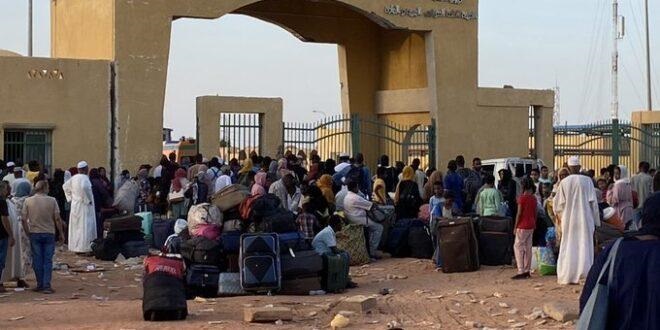
For most Sudanese fleeing the war, reaching Egypt was not easy. Months after the war began, Egyptian authorities imposed new restrictions and conditions on entry. Unofficially, they also abandoned the Four Freedoms Agreement signed between the two countries in 2004, which had guaranteed citizens of both states freedom of movement, residence without permits, as well as the right to work and own property in either country.
Before the outbreak of the war, entry into Egypt for Sudanese nationals was considerably easier. Women and girls, boys under the age of 16, and men over the age of 49 did not require entry visas.
After the war began, however, difficulties escalated. Entry requirements became far more restrictive. The previously free entry visa now requires what is known as a “security approval”, a costly entry permit whose fees range from approximately USD 3000 to USD 800, depending on how long the process takes.
These changes were introduced gradually. The first decision came one month after the outbreak of the war, when Egyptian authorities stopped recognizing Sudanese temporary travel documents that had previously allowed holders to cross the border in lieu of passports they did not possess.
Alternative Routes, Greater Hardships
With the new restrictions imposed since July 2023, and long waiting periods even for those with financial means, hundreds of families and individuals were forced to resort to alternative routes to enter Egypt. This included crossing through land routes controlled by smugglers who demand large sums of money, as well as traversing harsh and dangerous terrain. Along these routes, refugees are exposed to theft, financial exploitation, and fraud by smugglers, in addition to the risk of traffic accidents, where chances of survival are slim due to the absence of emergency medical services.
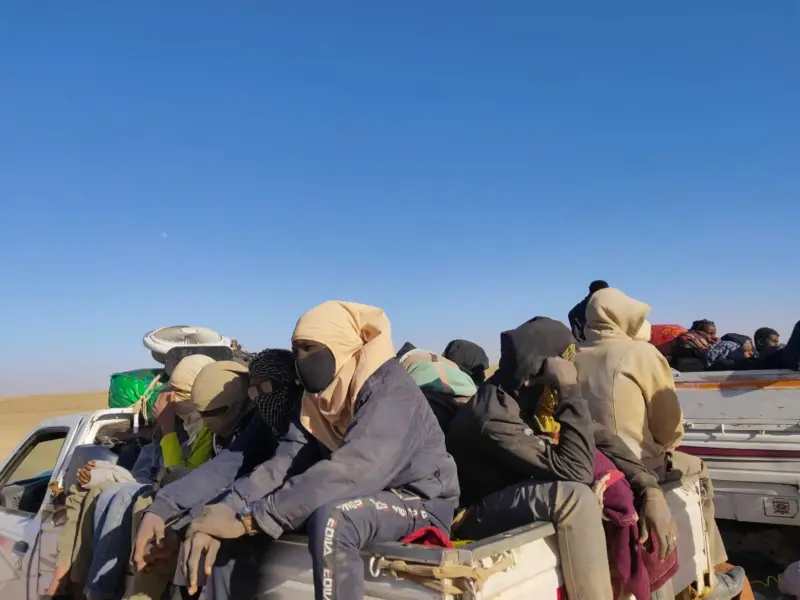
Since December 2023, the number of Sudanese crossing into Egypt through unofficial land routes has increased, following the Rapid Support Forces’ takeover of Gezira State. Gezira had originally become a major refuge for hundreds of thousands who fled Khartoum after the war began in April 2023. The expanding geography and scope of the war further contributed to the growing number of refugees fleeing to neighboring countries, with Egypt and Chad currently being the largest host countries for Sudanese refugees fleeing the war.
The arrests and restrictions Sudanese face in public spaces in Egypt are not new. In September 2023, five months after the war began, Egyptian border guards and police carried out mass arbitrary arrests of Sudanese who had entered Egypt irregularly through border crossings. Women, men, and children were detained in conditions described as harsh and inhumane. More than 800 Sudanese refugees were deported to Sudan between January and March 2024.
Escalating Anti-Refugee Discourse
Amid severe economic hardships and daily livelihood challenges faced by Egyptians for years, the war in Sudan and the resulting refugee influx became one factor—among others—in the formation of anti-refugee sentiment, particularly targeting Sudanese refugees. Personal accounts and public pages on Facebook and X engaged in coordinated campaigns portraying Sudanese presence in Egypt in negative terms.
Complaints from Egyptian officials about the economic burden posed by refugees—who are said to be competing with Egyptians over already scarce resources—have become recurrent. Media outlets close to the Egyptian authorities also participated in amplifying this narrative.
As forced deportation campaigns intensified and information regarding Sudanese refugees’ status in Egypt became increasingly contradictory, Sudan’s Ambassador to Cairo, Imad El-Din Adawi, held a press conference last month
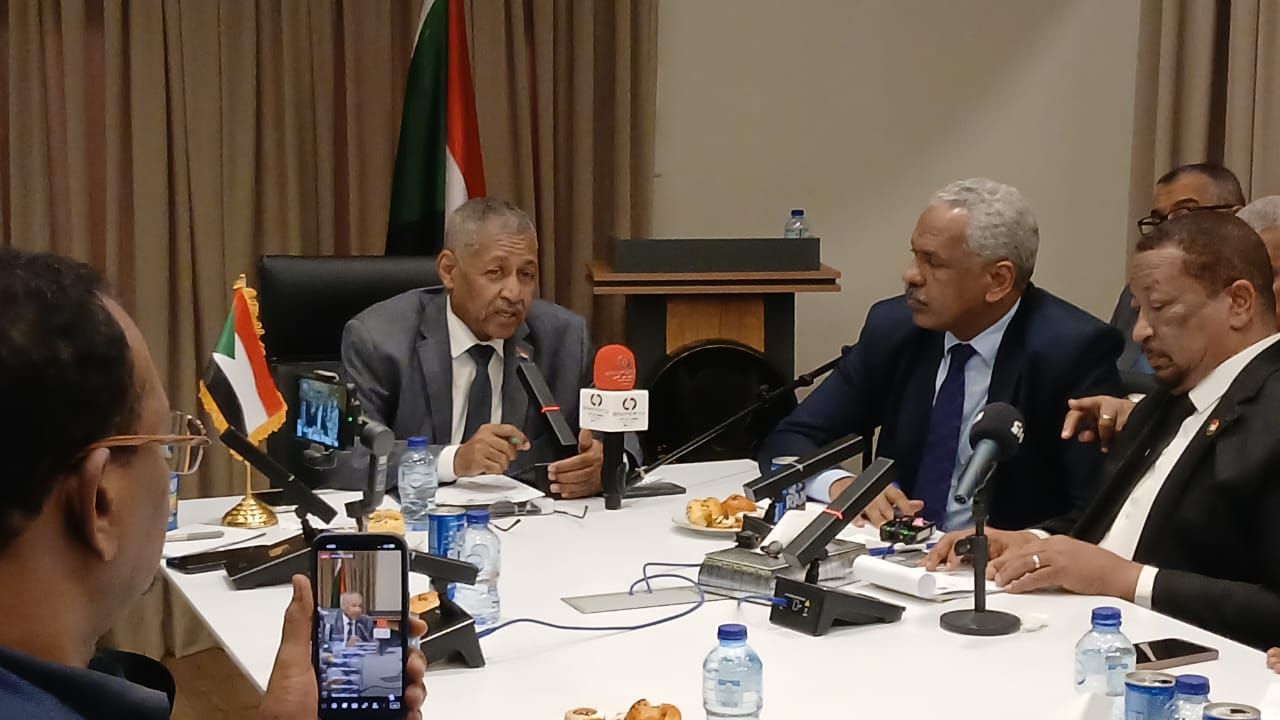
Adawi stated that the security measures implemented by Egyptian authorities apply to all foreigners, emphasizing Cairo’s right to regulate residency and asylum laws.
He urged Sudanese citizens to comply with residency and employment regulations, noting that the embassy’s role focuses on addressing Sudanese citizens’ legal situations, coordinating voluntary return initiatives for those who wish to go back, and providing consular assistance.
Egyptian journalist Amani El-Tawil, who follows Sudanese affairs, had suggested that the campaigns against Sudanese refugees may have been carried out at the request of Khartoum.
According to Adawi, 2,974 Sudanese were deported last year. He explained that 1,765 of them were deported after the embassy issued emergency travel documents following their detention by Egyptian authorities. He added that others were deported despite holding identification documents, due to violations of residency regulations, denying claims that Khartoum had requested restrictions on its citizens’ presence in Egypt.
Difficult Choices
Amid these complexities, thousands of Sudanese who fled the consequences of war in their country in search of safety, medical care, and a dignified life now face another kind of ordeal—and a deep fear of a future that offers little hope. Just as waves of displacement and refuge within Sudan were closely tied to people’s financial means and social circumstances—shaping how they traveled and when they were forced to leave their homes—decisions about returning to Sudan or leaving Egypt for another country are governed by the same logic. These choices vary from one family to another, and from one individual to the next, as people struggle daily to balance survival with the demands of everyday life.
Among them is Alaa (a pseudonym), who has been living with his small family in Cairo for more than a year and is now planning to leave Egypt for a Gulf country. “I can no longer live under these conditions,” he says.
Afraa’s husband—whose story opens this report—finds himself caught between two equally punishing options: staying in Cairo and working more than twelve hours a day for a very low pay that barely last a week, while facing constant threats of arrest and deportation, in exchange for ensuring that their children—who have been out of school throughout the war—receive a decent education; or leaving his family behind in Cairo confronting a range of hardships alone, and returning by himself to Sudan to explore the possibility of building a new life—something that was already a daily struggle even before the war began.


